Best Compression Packing Cubes in 2026
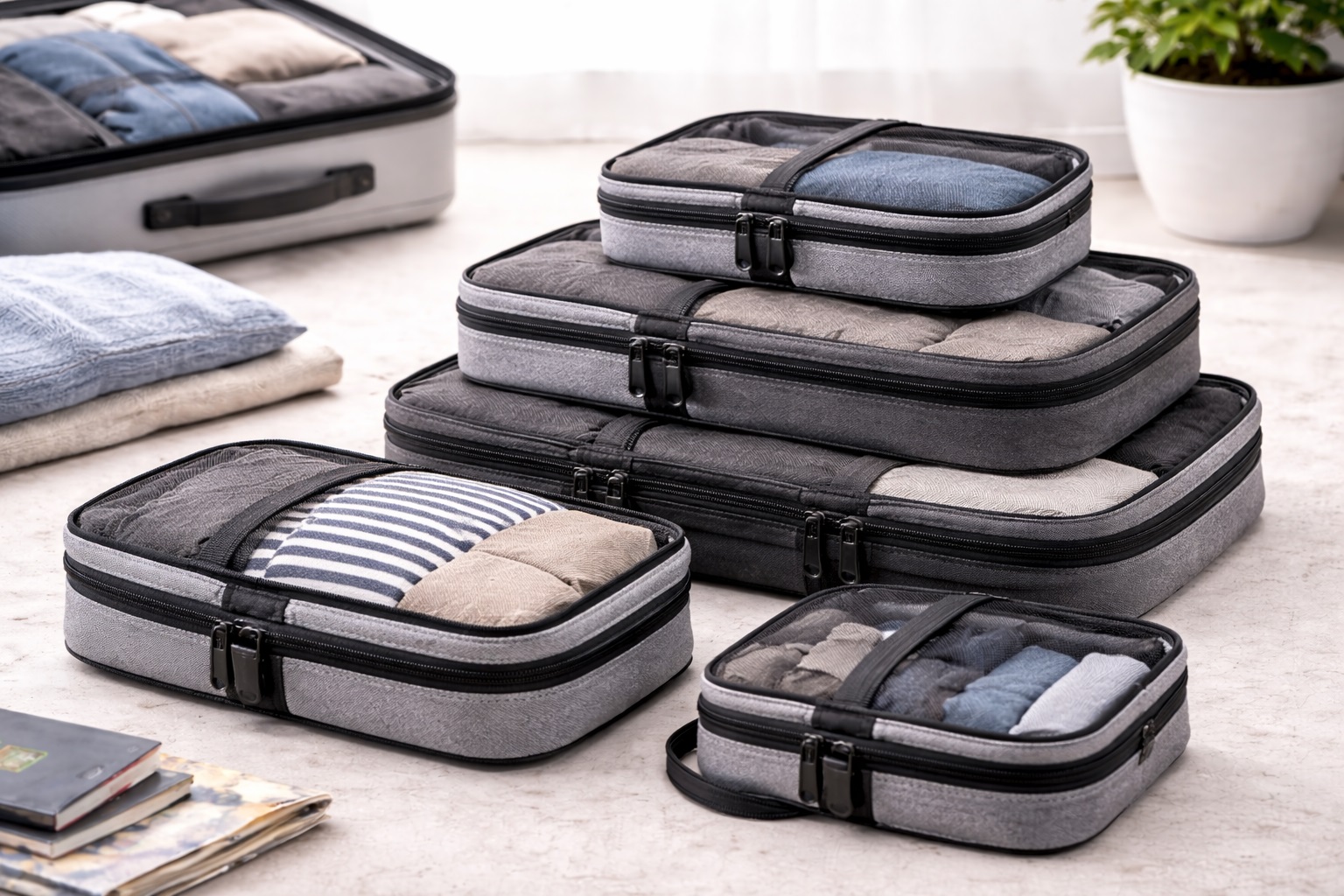
Not all packing cubes are created equal, and if you have ever tried to fit a two-week wardrobe into a carry-on bag, you already know the difference a good compression system makes. Compression packing cubes use a secondary zipper that flattens clothing after the main compartment is sealed, pushing out excess air and shrinking bulky items like sweaters and jackets down to a fraction of their original size. For travelers focused on space saving, this single feature can be the difference between checking a bag and traveling carry-on only.
In this guide we compare eight of the most effective packing cubes for compression available in 2026, looking specifically at how well each one squeezes bulk out of a packed suitcase without straining zippers or damaging fabric. Some rely on a simple double-zipper design, while others use more advanced paneling that distributes compression evenly across the cube instead of just at the seams. We also weigh price, durability, and how easy each set is to compress by hand without needing to kneel on the suitcase to force it closed.
Compression is only useful if the cube can survive being squeezed flat trip after trip, so we paid close attention to zipper strength and seam construction throughout this roundup. A compression cube with a weak zipper will fail exactly when you need it most – usually while trying to zip a suitcase shut minutes before a taxi arrives. Below, we break down all eight picks in detail before moving into a complete buying guide and FAQ section.
Keep in mind that compression is a trade-off. Squeezing clothing down tightly can increase wrinkling for structured fabrics, so the best set for you depends partly on what you typically pack. A traveler moving mostly casual, wrinkle-resistant clothing benefits the most from aggressive compression, while someone packing dress shirts may want to compress only the softer items and fold the rest separately.
It also helps to think about how compression fits into your broader packing strategy rather than treating it as a magic solution on its own. Pairing compression cubes with smart folding techniques, such as rolling casual items and laying flatter garments on top, tends to produce noticeably better results than relying on compression zippers alone. The eight sets below range from budget-friendly multi-packs to premium technical designs, so there is a reasonable option no matter how often you find yourself sitting on a suitcase trying to force the zipper closed.
Top 8 Best packing cubes Picks (Detailed Reviews)
1. Voken 6 Set – Best For Maximum Suitcase Coverage
Voken's six-piece set includes enough cubes in varied sizes to compress an entire suitcase worth of clothing, which makes it a strong starting point for travelers who want a complete space-saving system rather than piecing one together from multiple brands. The waterproof fabric holds its shape under compression instead of stretching out of shape, and the zippers are sized generously enough to grip easily even when you are pressing down on a fully packed cube. At around $18 for the full set, it delivers an outsized amount of space-saving capability for the price, especially for travelers packing for two or more people. The set also includes smaller pouches for accessories, which keeps compressed cubes reserved for bulkier clothing rather than getting cluttered with cables and toiletries.
- Pros:
- Premier build quality for the price bracket
- Waterproof fabric holds shape well under compression
- Reputable brand with consistently high ratings from repeat buyers
- Cons:
- Higher-end sets offer a more refined compression mechanism
- Limited color options beyond the standard set
Best For: Travelers who need to compress an entire suitcase of clothing on a budget.
Why We Recommend It: The combination of full suitcase coverage and dependable compression zippers makes this one of the most efficient space-saving purchases on this list.
2. Calpak Packing Cubes – Best For Compressing Bulky, Warm-Weather Gear
Calpak's set pairs breathable mesh with a compression zipper that squeezes bulky items like light jackets and rolled towels down significantly, while the mesh panel still lets you see what is inside without unzipping. This combination is particularly useful for trips that mix warm days and cool evenings, where you need to pack layers without sacrificing suitcase space. At around $60, it is the most expensive set here, but the compression performance and polished build justify the cost for travelers who pack heavier layers. The zipper pulls are also easier to grip under pressure than several competitors, which matters when you are pushing down on a stuffed cube to seal it shut.
- Pros:
- Premier build quality with a polished, modern look
- Breathable mesh improves visibility during compression
- Reputable brand known for coordinated luggage collections
- Cons:
- Higher price point than most sets in this category
- Limited color options depending on collection availability
Best For: Travelers packing bulky layers who still want visibility into each cube.
Why We Recommend It: Few sets compress bulky items this effectively while still keeping contents visible at a glance.
3. Eagle Creek Pack-It – Best For Long Trips Requiring Reliable Compression
Eagle Creek's Pack-It line has been refined over many years, and the compression zippers on this set are noticeably smoother and less prone to jamming than many newer competitors, which matters when you are compressing a cube daily on a multi-week trip. The reveal transparency panel also helps you see exactly how compressed a cube already is before adding more items. At around $40, it sits in the mid-range while offering compression performance that holds up trip after trip. Long-term travelers frequently mention that the zipper action stays smooth even after a full season of near-daily use, which is not always true of newer or less established brands.
- Pros:
- Premier build quality trusted by long-term travelers
- Reveal transparency makes checking compression levels easy
- Reputable brand with decades of experience in travel organization
- Cons:
- Higher price point than basic multi-packs
- Limited color options in some regions
Best For: Long-term travelers who compress and repack cubes daily.
Why We Recommend It: The compression zippers are built to survive daily use without jamming, which is a genuine advantage on extended trips.
4. Shacke Pak 5 Set – Best For Compression Plus Laundry Separation
The Shacke Pak set combines compression cubes with a dedicated laundry bag, which is a smart pairing since compressed clean clothing frees up exactly the space you need for a growing pile of worn items on a longer trip. The compression mechanism itself is straightforward and effective, squeezing folded clothing down noticeably without excessive force. At around $22, it offers strong value thanks to the extra laundry piece included in the set. Travelers on trips longer than a week often find this combination solves two space problems at once instead of needing a separate solution for dirty clothes.
- Pros:
- Premier build quality across the full set
- Laundry bag included frees up compressed space for worn clothing
- Reputable brand with a loyal following among frequent travelers
- Cons:
- Higher-end sets use slightly more technical compression fabric
- Limited color options compared to some competitors
Best For: Travelers who want compression benefits paired with laundry organization.
Why We Recommend It: The combination of effective compression and included laundry storage solves two space problems with a single purchase.
5. Away The Insider – Best For Premium, Long-Lasting Compression
Away's water-resistant nylon holds up especially well to repeated compression, resisting the stretching and thinning that can happen to cheaper fabrics after months of being squeezed flat. The clean design and sturdy zippers make this set feel built for travelers who compress cubes on nearly every trip rather than occasionally. At around $45, it is priced for travelers who want compression performance that will not degrade after a year of regular use. The understated design also makes the set easy to pair with luggage from other brands, so you are not locked into a single ecosystem to get reliable compression.
- Pros:
- Premier build quality with reinforced seams throughout
- Water resistant nylon resists stretching under repeated compression
- Reputable brand with strong customer service and warranty support
- Cons:
- Higher price point than most competing sets
- Limited color options compared to budget multi-packs
Best For: Frequent travelers who compress cubes on nearly every trip.
Why We Recommend It: The fabric quality means the compression mechanism keeps working smoothly long after cheaper sets would start to sag or lose shape.
6. Peak Design Packing Cube – Best For Rugged, Heavy-Duty Compression
Peak Design's tear-away zipper design is particularly well suited to compression use, since the reinforced construction resists the added strain that comes from squeezing a fully packed cube shut. The stiffer base also helps the cube hold its compressed shape rather than puffing back out once placed in a suitcase. At around $30, it is a strong pick for travelers who want compression durability that matches technical outdoor gear. The minimalist exterior also resists visible wear, so the cube still looks sharp even after months of being squeezed flat and stuffed into a crowded suitcase. The overall feel is closer to a piece of technical camera equipment than a soft-sided travel accessory, which is consistent with the rest of the brand's product line and explains why it earns repeat purchases from travelers who already own Peak Design bags.
- Pros:
- Premier build quality with a technical, minimalist design
- Tear-away zipper design resists the strain of compression
- Reputable brand known for durable, well-engineered travel gear
- Cons:
- Higher price point relative to a single-piece purchase
- Limited color options compared to lifestyle-focused brands
Best For: Travelers who want rugged, heavy-duty compression hardware.
Why We Recommend It: The reinforced zipper and stiff base combination keeps the cube compressed and flat, which is exactly what space-conscious packers need.
7. Amazon Basics 4-Piece – Best For Occasional Compression Needs
Amazon Basics offers a lighter compression experience that works well for travelers who only need to save space occasionally rather than on every trip. The double zipper pulls make the compression process straightforward, even if the overall squeeze is less dramatic than premium technical sets. At around $20, it is a low-risk way to try compression cubes before investing in a more advanced set. It works especially well for shorter trips where you only need to compress one or two bulky items rather than an entire suitcase. Because the fabric is thinner, the compression zipper does not need to fight against a rigid frame the way it does on stiffer technical cubes, which some travelers actually find easier to close by hand without needing to press down with their full body weight.
- Pros:
- Premier build quality for an entry-level price
- Double zipper pulls make compression simple
- Reputable brand with wide availability and easy returns
- Cons:
- Fabric is thinner than premium technical materials
- Limited color options compared to lifestyle brands
Best For: Occasional travelers who want to try compression without a big investment.
Why We Recommend It: It offers a genuine taste of compression benefits at a price that makes experimenting with the category easy.
8. Bagail 6 Set – Best For Compressing Mixed-Size Loads
Bagail's range of cube sizes means you can apply compression selectively, squeezing bulky sweaters in the largest cube while leaving delicate items in a smaller, less compressed cube nearby. This flexibility appeals to travelers who do not want uniform compression applied to every single item in their suitcase. At around $25, it offers a practical middle ground between aggressive compression and gentler organization. The range of sizes also makes it easier to plan ahead for a trip involving very different clothing needs, such as a business meeting followed by a few days of casual sightseeing. Because each size has its own compression zipper rather than sharing one mechanism across the whole set, a failure in one cube does not compromise the compression performance of the rest, which is a meaningful advantage over sets that rely on a single shared closure system.
- Pros:
- Premier build quality with consistent stitching across all sizes
- Various sizes allow selective compression by item type
- Reputable brand with strong repeat-purchase rates
- Cons:
- Higher-end technical fabrics feel more premium
- Limited color options beyond the core lineup
Best For: Travelers who want to compress some items while keeping others loosely packed.
Why We Recommend It: The size range gives you control over exactly which items get compressed, which suits travelers with mixed packing needs.
Buying Guide: How to Choose the Best Compression Packing Cubes
Compression cubes solve a specific problem, so it pays to understand exactly what to look for before buying a set built around this feature.
1. Type of Compression Mechanism
Most cubes use a secondary zipper that folds the cube in half after the main zipper closes, pushing out air. Some premium sets use roll-top or buckle-based compression instead, which can be gentler on delicate fabrics.
2. Zipper Durability Under Strain
Compression puts extra stress on zippers compared to standard packing cubes. Look for larger-toothed zippers and reinforced pull tabs, since this is the component most likely to fail under repeated compression.
3. Fabric Stretch Resistance
Fabric that stretches out of shape after repeated compression loses its effectiveness over time. Technical nylon blends tend to hold their compressed shape better than basic polyester across many uses.
4. Wrinkle Impact on Structured Clothing
Aggressive compression can increase wrinkling in dress shirts and structured garments. If you pack formal clothing, consider using compression selectively rather than uniformly across every cube.
5. Ease of Compressing by Hand
Some cubes require significant force to zip closed once compressed, which can be difficult for smaller hands or when working on a hard surface. Test how much pressure a set requires before committing to it for regular use.
6. Size Range for Different Item Types
A mix of cube sizes lets you apply compression where it matters most, such as bulky sweaters, while keeping smaller or more delicate items in less compressed cubes nearby.
7. Weight Savings vs. Space Savings
Compression reduces bulk but does not reduce the actual weight of your clothing, which matters if you are close to an airline weight limit rather than just a size limit for your bag.
8. Reinforced Corners and Base
Compressed cubes experience more stress at the corners than standard cubes. Reinforced stitching in these areas extends the useful life of the set significantly over repeated compressions.
9. Breathability After Compression
Tightly compressed clothing can trap moisture and odor. Mesh panels or breathable fabric help air circulate even when a cube is squeezed as flat as possible.
10. Water Resistance
Since compressed cubes are often packed tightly against other items, water resistance helps protect contents from spills elsewhere in the suitcase during transit.
11. Machine Washability
Compression cubes see heavy use, so confirm they can be machine washed without damaging the compression zipper mechanism or the fabric's ability to hold its shape.
12. Set Completeness
A full set that covers your entire suitcase is generally more space-efficient than mixing compression cubes from different brands with inconsistent sizing.
13. Price Relative to Space Saved
Compare the price of a set against the real-world space it saves. A slightly pricier set that reliably compresses bulky items can be worth it if it helps you avoid checked baggage fees.
14. Long-Term Zipper Performance
Ask how the zippers perform after months of regular compression rather than just out of the box. Reviews from long-term users are often more telling than initial impressions.
15. Compatibility With Carry-On Sizing
If your goal is avoiding checked bags entirely, test how much a fully packed set of compression cubes actually reduces your suitcase's overall bulk before your first big trip.
16. Noise and Bulk When Empty
Some compression cubes feel stiff or bulky even when empty, which can be a drawback on the outbound leg of a trip before you have anything to pack inside them. Softer, foldable designs pack down flatter for the trip out.
17. How the Set Performs Half Full
A cube built primarily for compression can sometimes look awkward or lose its shape when only partially packed. If you often travel with a partially full suitcase, check whether the set still functions well below full capacity.
18. Compatibility With Non-Compression Cubes
Many travelers mix compression cubes for bulky items with standard, uncompressed cubes for delicate or frequently accessed items like electronics and toiletries. Check that a compression set's dimensions still stack neatly alongside standard cubes from the same or a different brand, since mismatched shapes can waste the space compression is meant to save.
19. Signs a Compression Cube Needs Replacing
A compression cube nearing the end of its useful life often shows telltale signs before it fails completely: the zipper starts requiring extra force to close, the fabric no longer springs back to shape once uncompressed, or the seams near the corners begin to show visible strain. Replacing a cube at the first sign of these issues is cheaper than dealing with a blown zipper mid-trip.
20. Testing a Set Before a Big Trip
Before relying on a new compression set for an important trip, pack it fully at home and leave it compressed for a day or two to see how the fabric and zipper hold up under sustained pressure. This kind of dry run reveals weak points, such as a zipper that slowly creeps open, long before you are depending on the set in an unfamiliar city.
Frequently Asked Questions
Do compression packing cubes actually save space?
Yes, especially for bulky items like sweaters and jackets, where compression can noticeably reduce the volume of a packed suitcase compared to loose folding.
Do compression cubes cause more wrinkles?
They can, particularly for structured fabrics. Softer, casual clothing tends to compress well without significant wrinkling, while dress shirts may benefit from lighter compression.
Are compression zippers more likely to break?
They experience more stress than standard zippers, which is why zipper quality matters more for compression cubes than for basic organizational cubes.
Can I compress delicate fabrics safely?
Delicate fabrics generally do better in lightly packed or uncompressed cubes, reserving aggressive compression for sturdier, wrinkle-resistant clothing.
How much space do compression cubes typically save?
The amount varies by item type, but bulky clothing like fleece jackets or sweaters often compresses down significantly compared to folded, uncompressed packing.
Do compression cubes reduce the weight of my luggage?
No, compression reduces volume, not weight. Your suitcase will still weigh the same regardless of how tightly the clothing inside is compressed.
Can compression cubes be used for shoes?
Most compression cubes are designed for soft clothing rather than rigid items like shoes, which are better suited to a dedicated shoe pouch.
Do I need a different cube for each type of clothing?
Not necessarily, but using different sizes for different clothing categories tends to make compression more effective and organization easier overall.
How do I know if a compression zipper is high quality?
Look for larger, smooth-gliding teeth and reinforced pull tabs, along with reviews mentioning long-term reliability rather than just initial impressions.
Can compression cubes help avoid checked baggage fees?
For many travelers, yes, especially when paired with a carry-on-sized bag, since compression can be the difference between fitting everything in and needing to check a bag.
Do compression cubes work well for family trips?
Yes, and pairing compression with color coding can help families maximize suitcase space while still keeping each person's items organized and easy to find.
Is it worth compressing every single cube in my suitcase?
Not always. Selective compression, applied mainly to bulky or wrinkle-resistant items, often gives the best balance of space savings and clothing condition.
How long do compression cubes typically last?
Well-built sets with reinforced zippers often last several years of regular compression use before the mechanism starts to wear down noticeably.
Can compression cubes replace vacuum-sealed storage bags?
They serve a similar purpose for travel, though vacuum bags typically achieve more dramatic compression at the cost of requiring a pump or vacuum to seal properly.
Should beginners start with compression cubes or standard cubes?
Beginners can start with either, but those specifically trying to pack lighter or avoid checked bags will see the most immediate benefit from compression-style cubes.
Will compression cubes damage delicate fabrics like silk?
Very delicate fabrics can be prone to creasing under compression, so many travelers choose to fold silk or similarly delicate items separately rather than compressing them tightly.
Can compression cubes be reused across many trips without wearing out?
Yes, well-made sets with reinforced zippers are designed for hundreds of compression cycles, though how carefully you pack and how often you travel will affect the exact lifespan.
Can I combine compression cubes with vacuum-sealed bags for even more space?
Yes, some travelers use vacuum bags for out-of-season or bulky items they will not need until later in a trip, then rely on compression cubes for clothing they need regular access to throughout the journey.
Does compressing a cube make packing and unpacking slower overall?
Sealing a compression cube adds a few extra seconds compared to a standard cube, but most travelers find the extra step is worth the significant space it frees up elsewhere in the suitcase.
Can compression cubes tempt travelers into overpacking?
It is a common trap, since the extra space compression frees up can encourage packing more than necessary. Setting a firm item limit before packing helps avoid using the saved space just to bring more clothing than needed.
Do compression cubes need special care when stored between trips?
Storing cubes uncompressed and unzipped between trips helps the fabric and zipper teeth relax rather than sitting under constant tension, which can extend the useful life of the compression mechanism over years of intermittent use.
Final Verdict
- Top Pick: Voken 6 Set for the most complete space-saving coverage.
- Budget Choice: Eagle Creek Pack-It for reliable, long-lasting compression.
- Premium Choice: Calpak Packing Cubes for compressing bulky layers with style.
Compression packing cubes solve a very specific problem: fitting more into a limited amount of suitcase space without resorting to a bigger bag. The eight sets above each approach that challenge a little differently, but all of them share the zipper strength and fabric resilience needed to survive repeated compression trip after trip. Choose based on how aggressively you need to compress and how often you travel, and you should find real, lasting value in the space you save. Whichever set you land on, give the zippers a careful check every few trips, since catching an early sign of wear is far easier than discovering a torn seam the night before a flight.